
Navigating Wrongful Death Claims
Losing a loved one is an unthinkable tragedy, and when that loss comes as a result of someone else’s negligence, the grief can be compounded by confusion, anger, and frustration. Families in Georgia facing such a situation need to understand their legal options. This guide will help navigate wrongful death claims and provide insight into how families can seek justice and compensation.
Wrongful Death Claims
Wrongful death refers to a situation where a person dies due to the intentional or negligent act of another. In Georgia, these claims aim to provide financial relief to the deceased’s family for the loss of love, companionship, support, and future income.
The state of Georgia has specific rules and regulations surrounding wrongful death claims. It is vital to comprehend these laws and how they apply to your situation. Some of the complexities include determining who has the right to file the claim and the kind of damages that may be awarded.
Who Can File a Wrongful Death Claim?
In Georgia, there are two separate claims for a wrongful death case. One claim is owned by the estate of the decedent. The claim for full value of the life of the decedent is owned by the family. The decedent’s current, legal spouse has the absolute right to bring the claim on behalf of the family. If there is no surviving spouse, the children can file. If neither spouse nor children exist, the parents or the personal representative of the deceased’s estate may file the claim.
Types of Damages in Wrongful Death Claims
The damages available in the estate claim and the full value of the life of the decedent claim are distinctly different.
Some of the potential damages available for the estate claim are medical bills, funeral and burial expenses, payment for lost wages, property damage, the pain and suffering of the decedent before death and punitive damages if an aggravating circumstance exists.
Factors to be considered for the full value of the life of the decedent claim are loss of future financial support, loss of consortium and mental and emotional anguish.
Time Limit for Filing a Wrongful Death Claim
Georgia law stipulates a strict timeline for filing a wrongful death claim, known as the statute of limitations. Generally, the family has two years from the date of death to file the claim. Exceptions exist, but they are rare, so it is essential to act promptly.
How to Prove a Wrongful Death Claim
To succeed in a wrongful death lawsuit, our team must establish four key elements:
- Duty of Care: We prove the defendant owed the deceased a duty to act reasonably (e.g., a driver's duty to follow traffic laws).
- Breach of Duty: We show how the defendant failed that duty through negligence or intentional harm.
- Causation: We link the defendant's specific actions directly to the cause of death.
- Damages: We quantify the financial and emotional losses suffered by the surviving family members.
Common Causes of Wrongful Death in Georgia
While every case is unique, many claims we handle at Meeks Impact Law stem from:
- Commercial Vehicle Accidents: Including semi-truck collisions involving driver fatigue or improper maintenance.
- Passenger Vehicle Wrecks: Often caused by distracted driving, speeding, or DUI.
- Premises Liability: Fatalities occurring due to unsafe property conditions or inadequate security.
- Medical Malpractice: Errors made by healthcare professionals that lead to fatal outcomes.
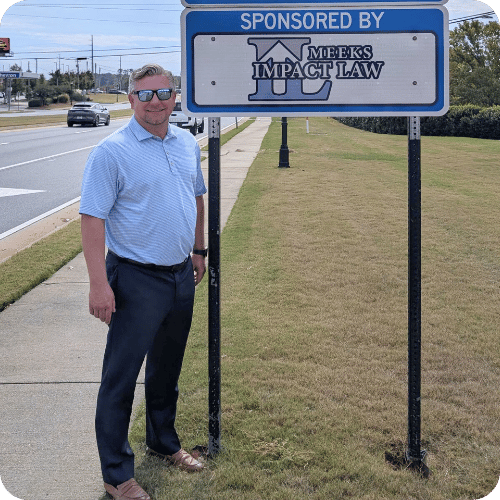
.png?width=500&name=B%20and%20Z%20photos%20(16).png "Meek Impact Law Supports the Forsyth Community with a food drive")
.png?width=500&name=B%20and%20Z%20photos%20(19).png "Meeks Impact Law Sponsors School Children")


.png?width=500&name=B%20and%20Z%20photos%20(18).png "Meeks Impact Law Supports Another Food Drive for Cumming Community")
.png?width=500&name=B%20and%20Z%20photos%20(20).png "Meeks Impact Law Supports Special Needs Adults in our community")
About our team
At Meeks Impact Law, our team shares one purpose: helping people through some of the hardest moments of their lives. We take pride in the small firm difference, where every client matters, every case receives personal attention, and our team works closely together to make sure no one feels lost in the process.
Why You Might Need a Georgia Wrongful Death Attorney
Attempting to handle a claim while grieving is overwhelming. An experienced attorney does more than just file paperwork; we act as your shield against insurance companies that want to settle for as little as possible. We handle the investigation, gather expert testimony, and ensure that the "full value of life" is accurately represented to the court or jury.
Take the First Step Toward Justice
You don’t have to carry this burden alone. At Meeks Impact Law, we treat our clients like family, providing the professional excellence and compassionate communication you deserve during this difficult time.
We're here when you're ready.
FAQs
First, make sure everyone is safe and call 911 to report the crash. Get medical attention, even if you feel fine, since some injuries take time to appear. If possible, gather photos, witness names, and insurance details. Then, contact a Georgia personal injury lawyer before speaking with the insurance company. Early legal guidance can help protect your rights and preserve valuable evidence.
The time limit to file a personal injury lawsuit in Georgia, known as the statute of limitations, can vary depending on the type of accident and injury. For example, car wrecks, wrongful death cases, and injuries on unsafe property may all have different filing deadlines.
Because important evidence can disappear quickly, it is always best to contact our office as soon as possible after an accident. From the start, we work to preserve key evidence, ensure you are receiving the comprehensive medical care you need, and handle communication with insurance companies so you can focus on recovery while we focus on protecting your case.
In many Georgia personal injury cases, the statute of limitations is two years from the date of the accident, but certain circumstances can shorten or extend that timeline. Talk to our team to determine the statute of limitations related to your circumstances and how we can step in to help, today.
Every case is different. Some settle within a few months, while others take longer depending on the extent of your injuries, medical treatment, and negotiations with the insurance company. Our goal is always to move your case forward efficiently while protecting the full value of your claim.
The timeline can also be affected by external factors such as court scheduling, insurance companies delaying responses, or bad actors trying to avoid accountability. Even when the process takes time, our team stays proactive so you can focus on healing while we handle the rest.
Throughout the process, we make communication simple and consistent. You’ll receive regular updates on your case and have easy access to our team through a secure app right on your phone. It includes texting-style messaging and case updates at the touch of a button, so you’re never left wondering where things stand. Of course, we’re always happy to talk with you directly by phone whenever you prefer.
It’s common for insurance companies, or even the at-fault party, to offer quick compensation after an accident. These early offers are often made before the full extent of your injuries, medical costs, or long-term needs are known. Accepting too soon can prevent you from recovering the full amount you’re entitled to.
Even if someone offers you money at the scene of the accident, that does not necessarily mean you don’t have a case. In many situations, those offers are an attempt to limit future liability. Our team can review the facts, explain your options, and help you understand what your claim may truly be worth before you make any decisions.
All of our personal injury cases are handled on a contingency fee basis, meaning there are no upfront costs to get started. We only collect a fee if we secure an offer off recovery for you. This approach keeps our interests aligned with yours and ensures that we only succeed when you do. Every fee agreement is explained in writing before representation begins so you can make an informed decision with confidence.
Getting started is simple. Reach out for a free consultation so our team can review your situation and help you understand your options. We will guide you through each step with clarity and care, answer your questions, and explain how we can begin building your case right away.
You can call (678)-341-5212, email Intake@meeksimpactlaw.com, or submit a message through our contact form to get started today.