Skip to content

Facing a cancer diagnosis after Roundup exposure?

Our legal team helps individuals and families understand their options and pursue accountability when a product exposure may have contributed to a serious diagnosis. 

Man applies weed killer to grassy area without knowing the dangers

 Lawsuits involving toxic or dangerous products are based on a simple principle: companies have a responsibility to warn people about known risks and to design products that are reasonably safe when used as intended.

Recent Roundup Litigation Updates (Updated March 4, 2026)Lawsuits involving glyphosate and Roundup® products are currently at a pivotal turning point. Critical developments in both state and federal courts this month have shifted how Georgia residents may seek compensation.


Preliminary Approval of $7.25 Billion Settlement (3/4/2026)


On March 4, 2026, a Missouri judge officially granted preliminary approval to a $7.25 billion nationwide class-action settlement. This is a major milestone that moves the litigation toward a structured resolution.

  • Notification Program: The court's order triggers a nationwide program to notify eligible individuals about their rights under the settlement.

  • Active Stay on Lawsuits: To allow the settlement process to proceed, all Roundup lawsuits in Missouri involving settlement class members are currently stayed (paused) until a final judgment is reached.

  • Important Deadlines: Eligible individuals have 90 days, until June 4, 2026, to decide whether to participate, file an objection, or formally opt out to pursue their own individual trial.

  • Fairness Hearing: The court has scheduled a final "fairness hearing" for July 9, 2026, to determine if the settlement should receive final approval.

Bayer continues to maintain that its glyphosate products are safe and stated that this agreement is a strategic step to contain litigation rather than an admission of wrongdoing.


Georgia Legislative Shift: The "Pesticide Immunity" Law


The local legal environment for Georgia residents became more complex on January 1, 2026, when Senate Bill 144 officially took effect.

  • Limited Liability: This law provides that pesticide manufacturers cannot be held liable for failing to warn consumers of health risks beyond those already required by the U.S. EPA.

  • Why it Matters: This legislation creates new hurdles for traditional "failure to warn" claims in Georgia, making it vital to evaluate cases based on specific exposure timelines and potential manufacturer misconduct.

Upcoming U.S. Supreme Court Review

The future of all Roundup litigation nationwide may be decided next month.

  • The Question: The Court will decide if federal law prevents individuals from filing state-level "failure to warn" lawsuits.

  • Expected Ruling: A decision is expected by the end of the Court's term in June 2026.

Scientific Update: Retraction of Safety Study

In late 2025, the scientific journal Regulatory Toxicology and Pharmacology formally retracted a 25-year-old safety study that had been a cornerstone of the defense for glyphosate. The journal cited "serious ethical concerns" regarding the independence of the authors and undisclosed involvement from the manufacturer. While the EPA stated it did not rely on this specific study for its findings, the retraction has introduced significant new questions into the ongoing debate over glyphosate's safety.

Thousands of lawsuits have been filed across the United States by individuals alleging that long-term exposure to glyphosate-based herbicides, such as Roundup®, contributed to cancers like non-Hodgkin’s lymphoma.

    • Early Verdicts (2018–2019): Following Bayer’s acquisition of Monsanto in 2018, several initial jury trials resulted in multi-million dollar verdicts for plaintiffs. These cases focused on allegations that the manufacturer failed to provide adequate warnings about potential health risks.
    • Initial Settlement (2020): In 2020, Bayer announced a massive $10 billion agreement to resolve approximately 75% of the 125,000 claims then active in the U.S..
    • Record Georgia Verdict (2025): In March 2025, a Georgia jury awarded a record-setting $2.1 billion to a plaintiff who alleged long-term Roundup use led to his cancer diagnosis. This verdict highlighted the continued success of individual claims in Georgia courts.
    • Preliminary Settlement Approval (March 4, 2026): On March 4, 2026, a Missouri court granted preliminary approval for a new $7.25 billion nationwide class-action settlement. This agreement is designed to provide a structured compensation path for current and future claimants through 2042.
    • A Shift in Georgia Law (2026): Effective January 1, 2026, the Georgia legislature passed Senate Bill 144, providing a "complete defense" for pesticide manufacturers whose labels meet EPA standards—a move that significantly changes how new cases are filed in the state. 

Today, the litigation is at a critical juncture as individuals have until June 4, 2026, to decide whether to participate in the new settlement or opt out to pursue an individual trial.

In March 2026, the scientific debate surrounding glyphosate remains a focal point of litigation, especially following the recent formal retraction of a long-standing safety study.

What do scientific and government organizations say about glyphosate and cancer risk?

Different organizations have reached different conclusions based on their specific review methods and standards.

  • IARC (World Health Organization): The International Agency for Research on Cancer (IARC)
  • classified glyphosate as “probably carcinogenic to humans” (Group 2A). This finding was based on "limited evidence" of a link to non-Hodgkin lymphoma in humans and "sufficient evidence" of cancer in experimental animals.
  • U.S. EPA: The U.S. Environmental Protection Agency (EPA)
  • has maintained that glyphosate is “not likely to be carcinogenic to humans” when used according to label directions. The EPA's review focuses primarily on the active ingredient (pure glyphosate) rather than the finished Roundup formula.
  • 2026 Scientific Retraction: In early 2026, the journal Regulatory Toxicology and Pharmacology formally retracted a 25-year-old safety study often cited in defense of glyphosate, citing "serious ethical concerns" regarding undisclosed manufacturer influence. This has led to renewed scrutiny of the data previously used to support the chemical's safety.
  • The "MAHA" Initiative: Under current federal health policy, the "Make America Healthy Again" initiative has allocated $100 million toward independent research into chemical-free agricultural alternatives, highlighting a shift toward more transparent scientific reviews.

Litigation often focuses on whether consumers received adequate warnings about these potential risks rather than requiring total scientific agreement between every agency.


Yes. In 2017, California added glyphosate to its Proposition 65 list of chemicals known to the state to cause cancer. Proposition 65 is a right-to-know law that requires businesses to provide warnings about significant exposures to listed chemicals but does not ban the products themselves.

  • Regulatory Differences: This listing reflects California’s specific safety standards and does not mean every regulatory agency agrees on the level of risk. For example, the U.S. EPA continues to state that glyphosate is "not likely to be carcinogenic to humans" when used according to its label.
  • A Changing Legal Landscape: The difference in interpretation between state and federal agencies is a primary driver of ongoing litigation.
  • Georgia Legislative Update: Effective January 1, 2026, Georgia law SB 144
  • provides a defense for manufacturers if their labels comply with U.S. EPA standards, regardless of other state-specific lists like California’s.
  • Supreme Court Review: The U.S. Supreme Court is scheduled to hear oral arguments on April 27, 2026, in a case that could determine whether federal EPA labeling requirements override state-level "failure to warn" laws entirely.

This conflict between state warnings and federal findings is a key reason why legal discussions regarding Roundup safety remain so active in 2026.


Many people do not immediately connect a diagnosis with past product exposure. It is very common for individuals to start asking questions years later after hearing new information or seeing news coverage.


In Georgia, product liability cases are subject to legal deadlines that depend on several factors, including when an injury was discovered and the specific circumstances involved. Not having complete proof of exposure right now does not automatically mean you do not have options.


Our team can help you determine whether your timeline and circumstances may still fit within Georgia law and whether it makes sense to explore next steps.

Speaking with a lawyer for a case review is confidential, and reaching out does not obligate you to file a claim.


Many people contact us because they are unsure. They may be trying to understand what they used years ago, whether their diagnosis could be related, or what options might exist under Georgia law. That uncertainty is completely normal.


Our goal is to give you clear information and help you understand your options so you can make a decision that feels right for you.

Roundup® litigation has developed over several years, with both settlements and jury verdicts shaping how cases move forward.


Earlier Settlements and Ongoing Claims
Since 2020, Bayer has paid approximately $10 billion to resolve a large number of Roundup-related claims. Even after those resolutions, tens of thousands of cases have remained pending in state and federal courts across the United States, which is why litigation continues today.


2025 Georgia Jury Verdict
In March 2025, a Georgia jury awarded approximately $2.1 billion to a plaintiff who alleged that Roundup® exposure contributed to their cancer. Bayer has announced plans to appeal that verdict.

It is important to understand that jury verdicts are specific to the facts of individual cases. They do not guarantee outcomes for other people, but they are one reason many individuals continue to ask questions about whether they may have options worth legally pursuing.

We are happy to answer your questions and help you navigate what makes the most sense for your situation and your family.

These questions and answers are here to help you understand the full picture before deciding
your next right step.

Example Scenarios

Forsyth Woman used weed killers in her garden every year

You regularly used weed killer around your home or property for years.

You sprayed around fences, driveways, gardens, or acreage season after season as part of routine yard maintenance. After receiving a serious diagnosis, you may now be wondering whether long-term exposure could have played a role and how it has affected your health and daily life.

Homeowners often  want answers about whether their long-term residential use could be relevant to their situation.

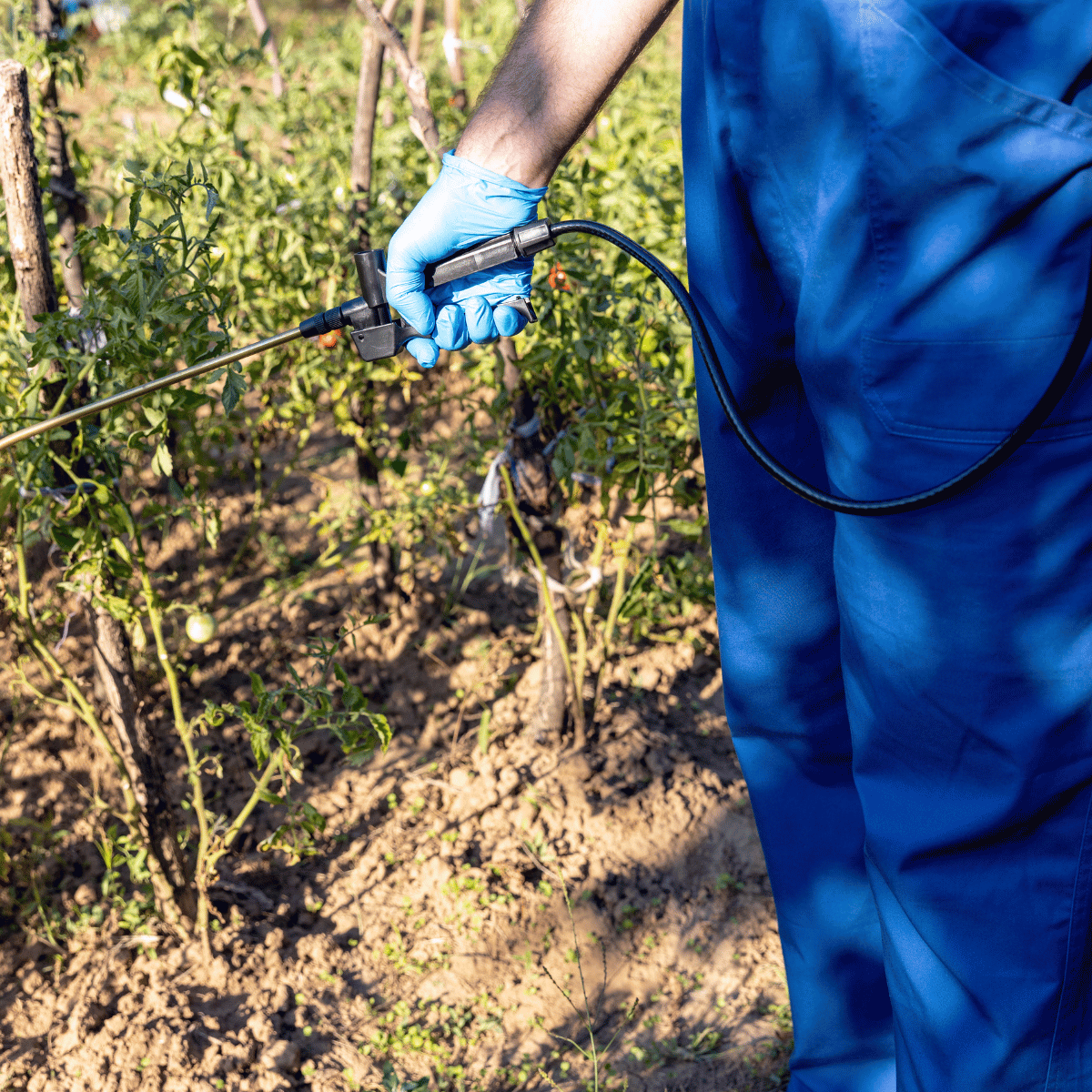
A landscaper routinely used herbicides in his work

You worked for years in an environment where herbicides were regularly used or applied.

This may include landscaping, agriculture, grounds maintenance, or similar outdoor work. Some people mixed or sprayed products directly, while others were simply around treated areas as part of daily responsibilities. After a serious diagnosis, many begin questioning whether long-term workplace exposure could be connected.

Many people reach out to us simply looking for clarity about their situation.

Gravely ill Georgia man in hospital with lymphoma surrounded by loved ones

A loved one passed away due to a serious illness following years of herbicide exposure.

You may now be left with questions about whether long-term exposure played a role and how that illness affected your family’s future. Many families seek answers as they try to understand whether Georgia law provides any options or protections for them as they try to heal.

A conversation with our team can help clarify whether a wrongful death claim may be worth exploring.

What Our Clients Are Saying

Attorneys Zach and Beverly ready to fight for injured Georgians facing a cancer diagnosis after glyphosate exposure